
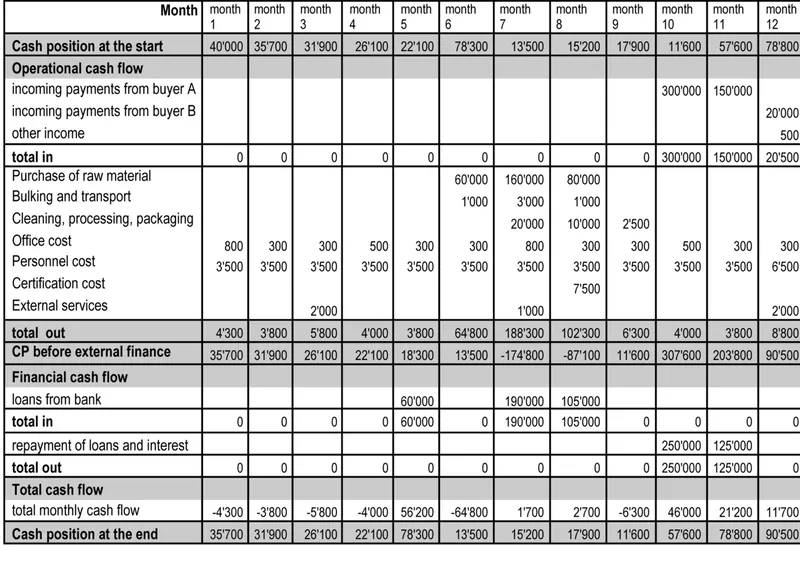
A cash flow statement shows how cash moves in and out of your business over a period. It has three sections: operating activities (core business cash), investing activities (assets), and financing activities (debt and equity). Positive operating cash flow means your business generates enough cash from operations to sustain itself.
Key Moves
- Operating activities: cash from sales, payments to suppliers, salaries, rent — the core business
- Investing activities: purchase or sale of equipment, property, investments
- Financing activities: loans received, loan repayments, owner contributions, dividends
- Positive operating cash flow = business sustains itself from operations
- Negative operating cash flow = business relies on financing to survive
See calculating your monthly cash flow and operating cash flow for more on this.
Frequently Asked Questions
How is a cash flow statement different from a profit and loss statement?
P&L shows revenue and expenses (accrual basis). Cash flow statement shows actual cash movement. A business can be profitable but cash-negative.
Where do I find my cash flow statement?
Accounting software (QuickBooks, Xero) generates it automatically. Or ask your accountant.
What does negative cash flow mean?
More cash is going out than coming in. Temporary negative cash flow during growth is normal. Persistent negative cash flow is dangerous.